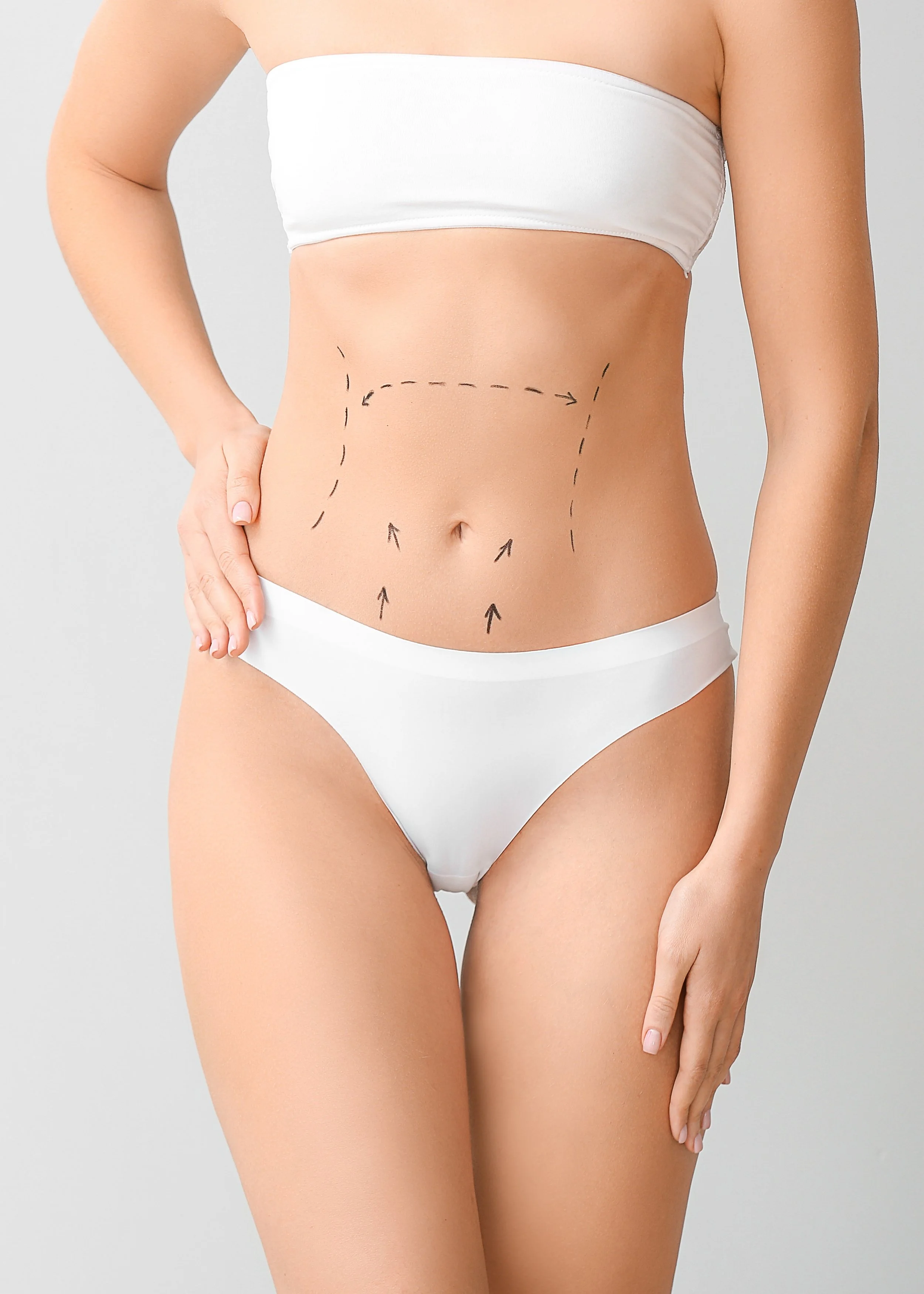
Abdominoplasty (Tummy Tuck):
Restoring a Firm, Flat Midsection
Many factors—including pregnancy, significant weight loss, and the natural aging process—can lead to skin laxity, excess fat, and weakened abdominal muscles that resist diet and exercise. When crunches and cardio aren't enough, Abdominoplasty (commonly known as a Tummy Tuck) provides a powerful surgical solution.
At The Plastics Atelier in Omaha, we specialize in Abdominoplasty, a procedure designed to tighten and flatten the abdomen by achieving three core goals:
Tightening Underlying Muscles: Repairing separated or stretched abdominal muscles (diastasis recti).
Removing Excess Skin: Excising loose, hanging skin from the lower abdomen.
Refining Contour: Removing localized pockets of fat for a smoother silhouette using liposuction.
Ideal Candidates for Abdominoplasty
The best candidates for a Tummy Tuck are individuals who are close to their ideal body weight but struggle with:
Loose or Sagging Skin: Excess skin that creates folds, often called an "apron" (pannus), particularly below the naval.
Diastasis Recti: The separation of the vertical abdominal muscles, which leads to a noticeable bulge or protrusion, even when standing.
Stretch Marks: While not the primary goal, skin containing stretch marks below the navel can be removed with the excess skin.
The Procedure: Tailored Techniques
Dr. Hall will customize the Abdominoplasty technique to address your specific needs for skin removal, muscle repair, and fat contouring.
1. Mini Abdominoplasty
This technique is reserved for patients who have mild skin laxity and minimal or no muscle separation, confined primarily to the area below the naval.
Incision: The incision is significantly shorter than the full Tummy Tuck.
Focus: It addresses the lower abdomen only. The navel is usually not repositioned.
2. Full Abdominoplasty (The Traditional Tummy Tuck)
This is the most common and comprehensive approach, necessary for patients with significant loose skin and muscle separation.
Incision: A horizontal incision is made just above the pubic hairline, extending from hip to hip. A second, small incision is made to free the navel.
Muscle Repair: The skin is lifted, and the rectus (abdominal) muscles are meticulously pulled together and sutured (plication) to create a firm, internal girdle.
Skin Redraping: The excess skin is pulled down, excised, and the remaining skin is sutured closed, creating a flat abdomen. The naval is brought out through a new, natural-looking opening.
3. Extended Abdominoplasty
This approach is reserved for patients that has additional laxity that extends to the back of the flanks that would benefit from excision of skin in that location as well. This approach is slightly more extensive than a full abdominoplasty but does not wrap all the way around like a body lift would.
Incision: A horizontal incision is made just above the pubic hairline, and wraps around each flank to your back, but does not connect in the middle. A second, small incision is made to free the navel.
Muscle Repair: The skin is lifted, and the rectus (abdominal) muscles are meticulously pulled together and sutured (plication) to create a firm, internal girdle.
Skin Redraping: The excess skin is pulled down, excised, and the remaining skin is sutured closed, creating a flat abdomen. The naval is brought out through a new, natural-looking opening.
4. Circumferential Abdominoplasty (Body Lift)
Often required after massive weight loss, this technique addresses skin laxity around the entire trunk.
Incision: The incision extends around the entire torso, addressing the abdomen, flanks, and lower back.
Muscle Repair: The skin is lifted, and the rectus (abdominal) muscles are meticulously pulled together and sutured (plication) to create a firm, internal girdle.
Goal: Provides the most dramatic tightening for patients with significant loose skin 360 degrees around the body.
Recovery and Results
Abdominoplasty is a major surgery requiring a commitment to recovery, but the results are highly rewarding.
Downtime: Patients typically require 2 weeks off work for initial recovery. Due to the muscle repair, the torso will feel tight, and standing fully upright may be uncomfortable for several days but is generally achievable after 7 days.
Compression Garment: A compression garment must be worn continuously for several weeks to reduce swelling, support the new abdominal contour, and reduce the risk of seroma or fluid accumulating under the skin.
Scarring: The final scar is permanent but is carefully placed low on the abdomen so it can be concealed by underwear or a bikini bottom. The final contour of the abdomen is tight, firm, and flat.
We invite you to schedule a consultation with Dr. Hall at The Plastics Atelier in Omaha, Nebraska, to determine the best approach for achieving your flat, sculpted midsection goals.